
The Way You Speak to Yourself Matters
Take a moment to imagine speaking to someone you love in the same way you sometimes speak to yourself.
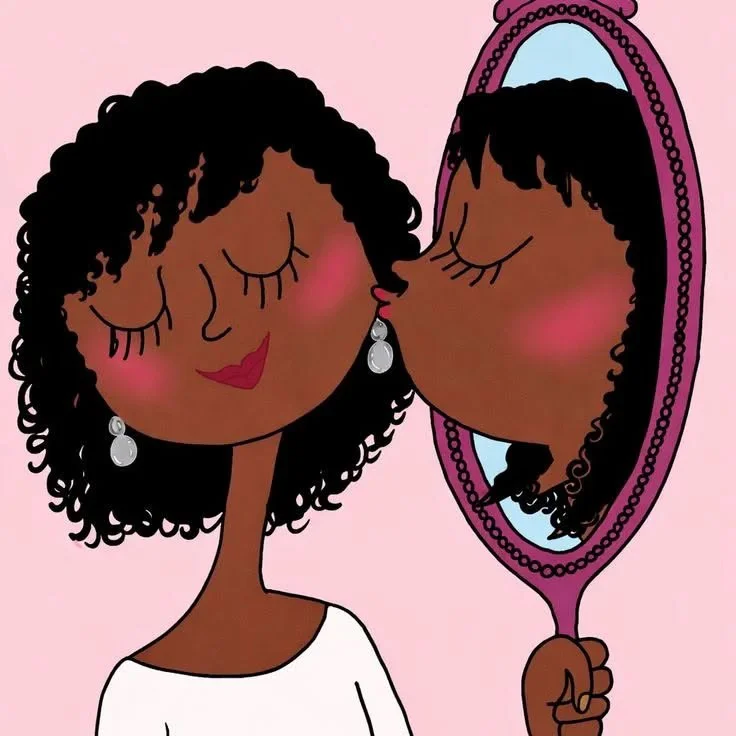
Every time they looked in the mirror.
Every time they got dressed.
Every time they enjoyed a meal or reached for dessert.
Would you tell them they needed to earn their food?
Would you criticise their appearance after every meal?
Would you point out every flaw before they left the house?
For most of us, the answer is no.
Yet when it comes to ourselves, these thoughts can feel so familiar that we barely notice them anymore. Over time, they become part of the background noise of everyday life.
The truth is, the relationship you have with your body isn't shaped by a single thought or one difficult day. It's shaped by the conversations you have with yourself, day after day, often without even realising it.
Just as these thought patterns can develop over time, they can also begin to change.
Your brain believes what you repeatedly tell it
Our brains are remarkably adaptable. This ability, known as neuroplasticity, allows our brains to strengthen the pathways we use most often.
When we repeatedly criticise our bodies, compare ourselves to others or attach our self-worth to our appearance, these thought patterns become easier to access. It's not because they're true, but because they've been rehearsed.
Psychologists also describe something called negative attentional bias. Put simply, our brains naturally pay more attention to perceived threats or negatives than positives. If you've spent years focusing on what you don't like about your body, your brain becomes very good at finding more evidence to support those beliefs.
And just as we can strengthen these patterns, we can begin to build new ones.
What does a healthy relationship with your body actually look like?
One of the biggest misconceptions is that body confidence means loving how you look every single day.
It doesn't. Research on body appreciation suggests something much more realistic.
Body appreciation is recognising that your body deserves respect, care and kindness regardless of how you feel about your appearance on any given day.
Some days you may feel confident. Other days you may not. Neither changes your worth.
Studies consistently show that people with greater body appreciation tend to experience:
Greater psychological wellbeing
Lower body dissatisfaction
Fewer disordered eating behaviours
A healthier relationship with food
More intuitive eating habits
Importantly, body appreciation isn't about ignoring your appearance. It's about recognising that your body is so much more than something to be judged.
From self-criticism to self-compassion
Many of us grow up believing that being hard on ourselves will somehow motivate us to change.
"If I'm kinder to myself, won't I become complacent?"
Interestingly, the research suggests the opposite. Psychologist Dr Kristin Neff describes self-compassion as treating yourself with the same kindness, understanding and patience that you would naturally offer someone you care about.
Self-compassion has three key components:
Self-kindness instead of harsh self-judgement
Common humanity - remembering that everyone struggles sometimes
Mindfulness - acknowledging difficult emotions without becoming overwhelmed by them
Research has linked greater self-compassion with:

Lower body dissatisfaction
Reduced shame around eating
Fewer disordered eating behaviours
Greater emotional resilience
Improved overall wellbeing
Being compassionate towards yourself means recognising that lasting change is far more likely to come from encouragement than criticism.
Your body is more than something to look at
One of the most effective ways to improve body image isn't actually to focus on appearance at all.
Instead, psychologists encourage us to think about body functionality, everything our body allows us to do.
Your body has carried you through every ordinary day.
It has helped you laugh until your stomach hurt.
It has hugged people you love.
It has recovered from illness.
It has adapted through stress, change and uncertainty.
It allows you to walk, breathe, think, dance, rest, digest your food and experience the world around you.
Research has found that spending even a short amount of time reflecting on what your body can do, rather than how it looks, can significantly improve body appreciation and reduce appearance-related concerns. The next time you catch yourself focusing on what your body looks like, gently ask yourself:
What has my body done for me today?
The answer might surprise you.
A small shift that can make a big difference
Changing the way you speak to yourself doesn't happen overnight. There will still be days when negative thoughts appear. The goal is to stop believing every single one.
Next time you notice your inner critic becoming louder, pause and ask yourself:
Would I say this to someone I love?
Is this thought helping me?
Is there another way I could speak to myself right now?
Sometimes the kindest replacement isn't: "I love my body."
Sometimes it's simply: "My body deserves kindness today."
And that's enough.
A reflection for today
Before you finish reading, take a moment to complete these sentences.
Today my body helped me to...
One thing I appreciate about my body today is...
Tomorrow I will care for my body by...
You don't have to love your body every day.
You don't have to feel confident every day.
But what if, instead of seeing your body as something to fight against, you started seeing it as somewhere safe to come home to? Because your body has been on your side all along. Perhaps it's time to return the favour.
References
Alleva, J. M., et al. (2015). A Randomized-Controlled Trial Investigating Potential Underlying Mechanisms of a Functionality-Based Approach to Improving Body Image. Body Image, 15, 81–88.
Braun, T. D., Park, C. L., & Gorin, A. (2016). Self-Compassion, Body Image, and Disordered Eating: A Review of the Literature. Body Image, 17, 117–131.
Neff, K. D. (2003). Self-Compassion: An Alternative Conceptualization of a Healthy Attitude Toward Oneself. Self and Identity, 2(2), 85–101.
Tylka, T. L., & Wood-Barcalow, N. L. (2015). The Body Appreciation Scale-2: Item Refinement and Psychometric Evaluation. Body Image, 12, 53–67.
Guest, E., Costa, B., Williamson, H., et al. (2019). The Effectiveness of Interventions Aiming to Improve Body Image in Adults: A Systematic Review. Body Image, 30, 10–25.